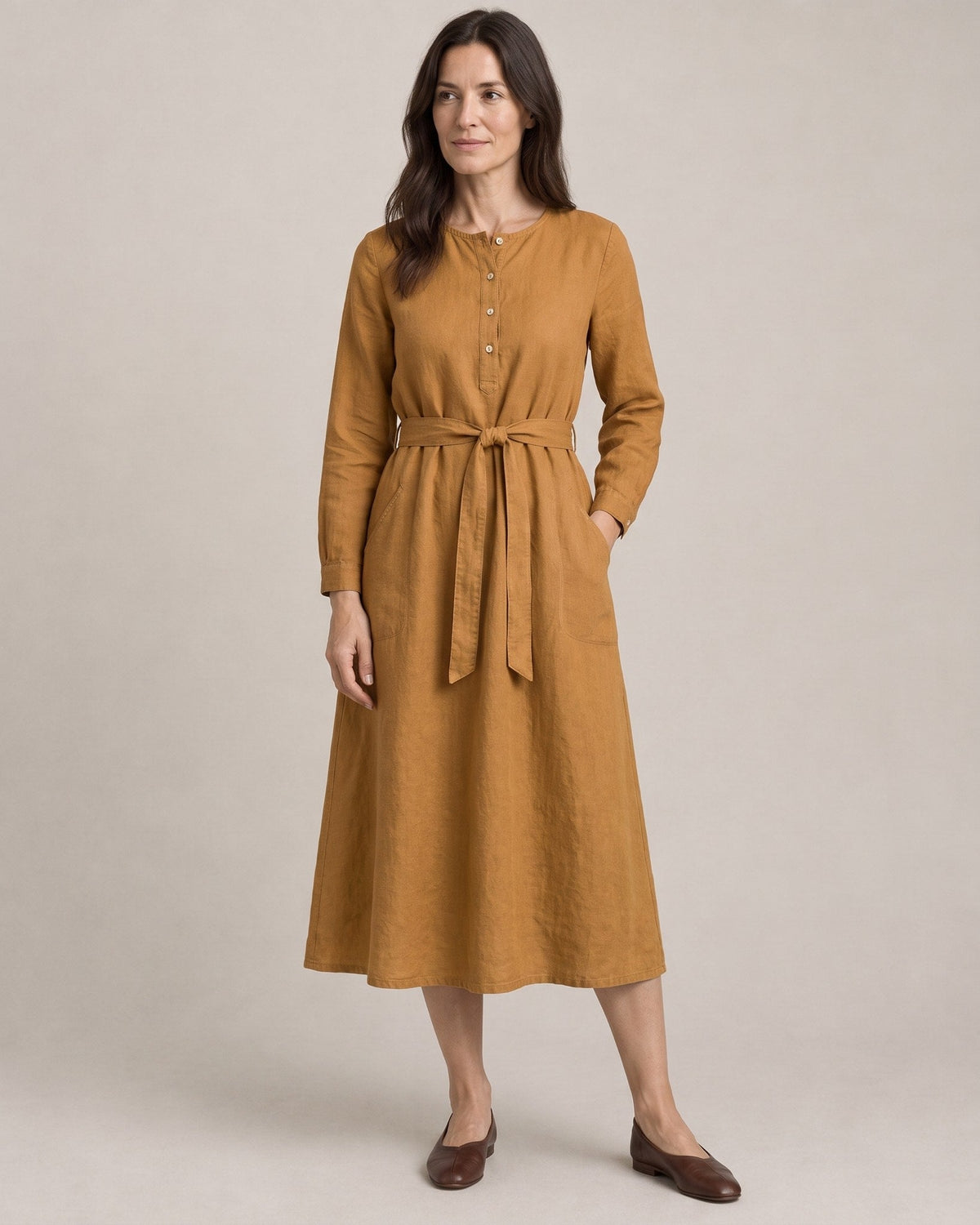
When you’ve lived a few more seasons, dressing well becomes less about chasing trends and more about trusting pieces that earn their place. The wardrobe stops shouting. It starts speaking quietly. And linen — with its soft drape, its honest texture, its way of getting better the longer you wear it — is the fabric that listens.
If you’re 45 or older, you already know what doesn’t work. The stiff polyester blouse that suffocates by noon. The dress that fit in the changing room and nowhere else. The “statement piece” worn once, then quietly donated. What stays with us, we’ve noticed, is the linen: breathable, forgiving, timeless in the truest sense.
Below is the capsule — seven pieces in pure European linen that can carry you from a garden morning to a city evening, from April through October, from now into the next decade. Build it slowly. Wear it often.
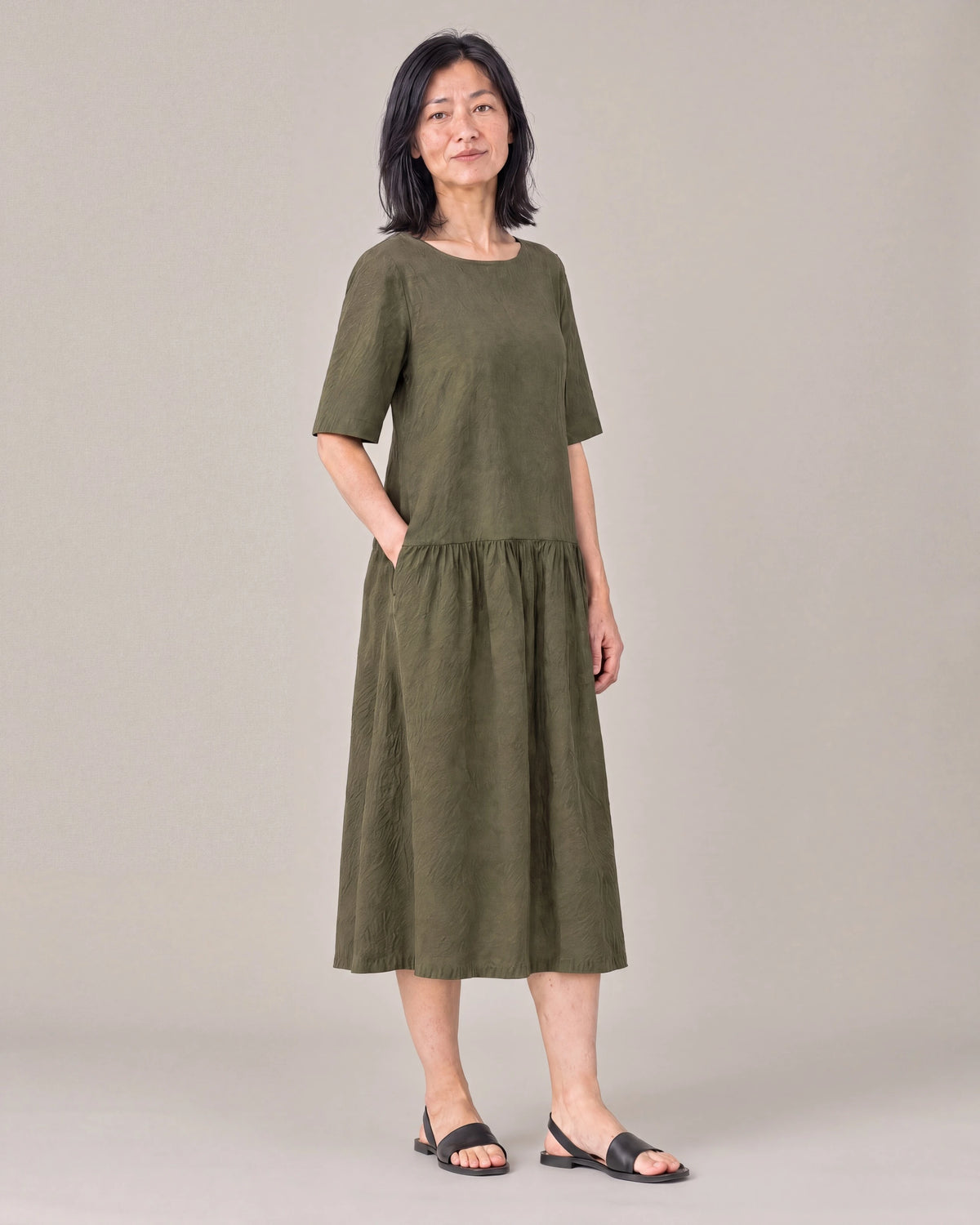
1. The long linen dress you can put on without thinking
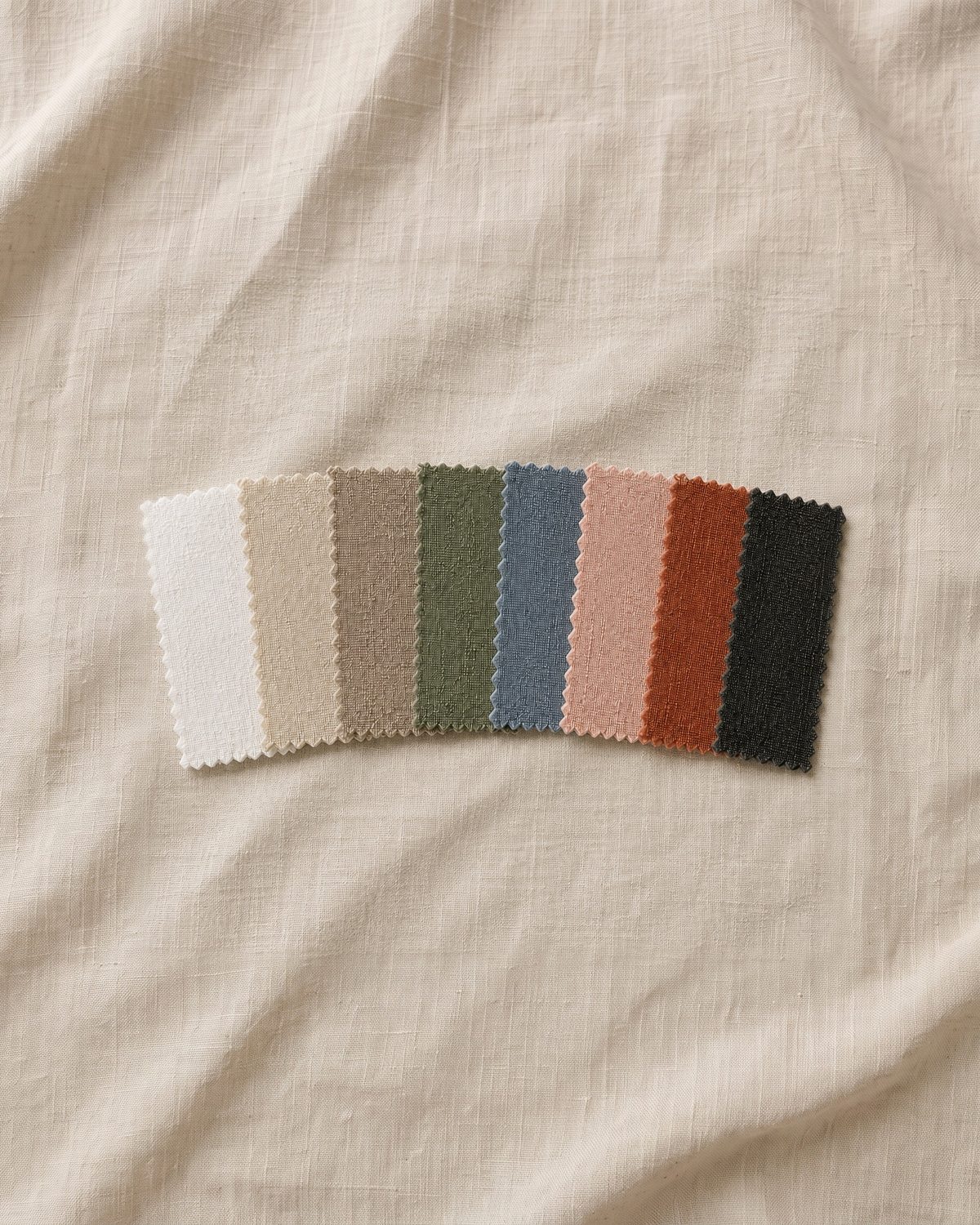
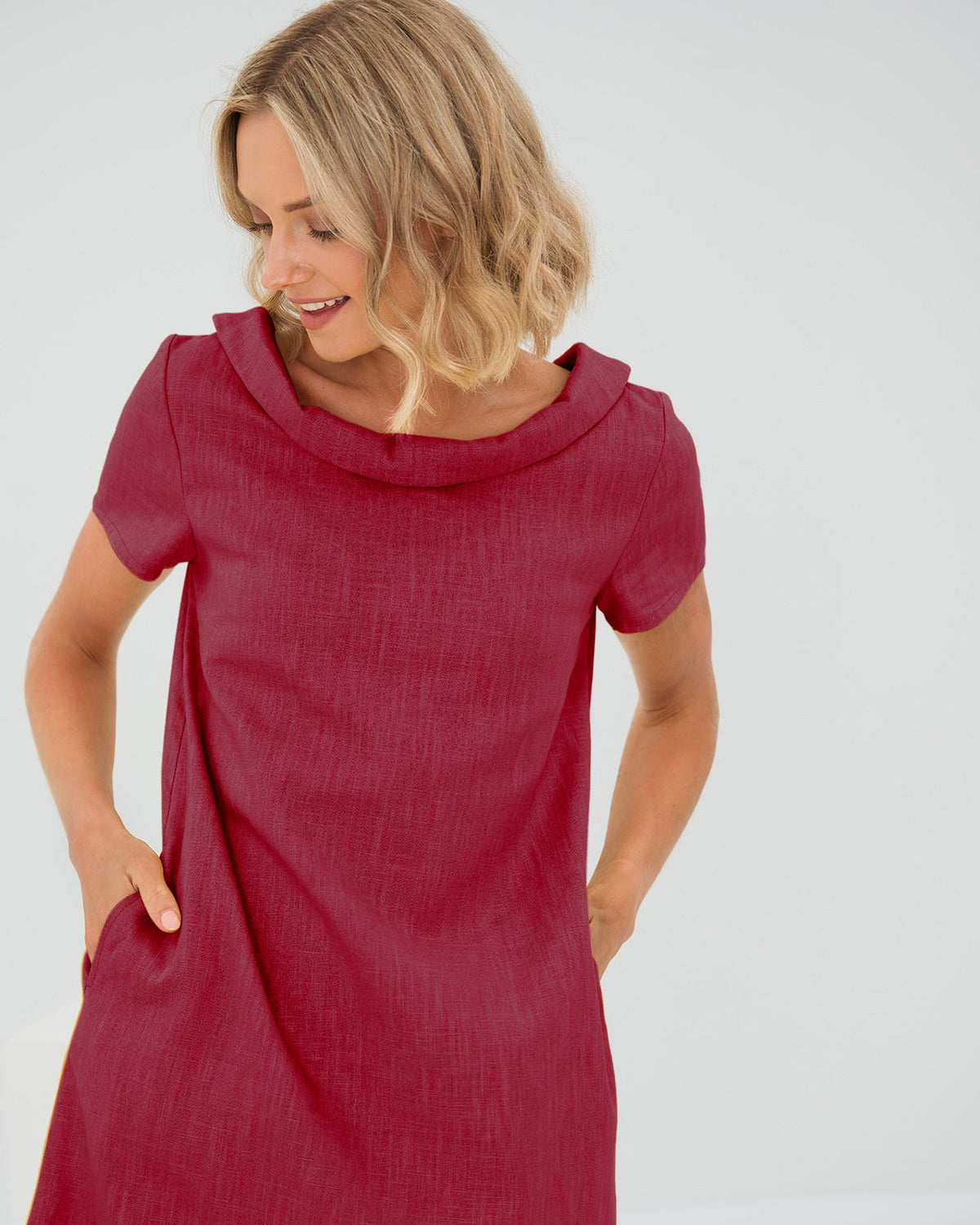
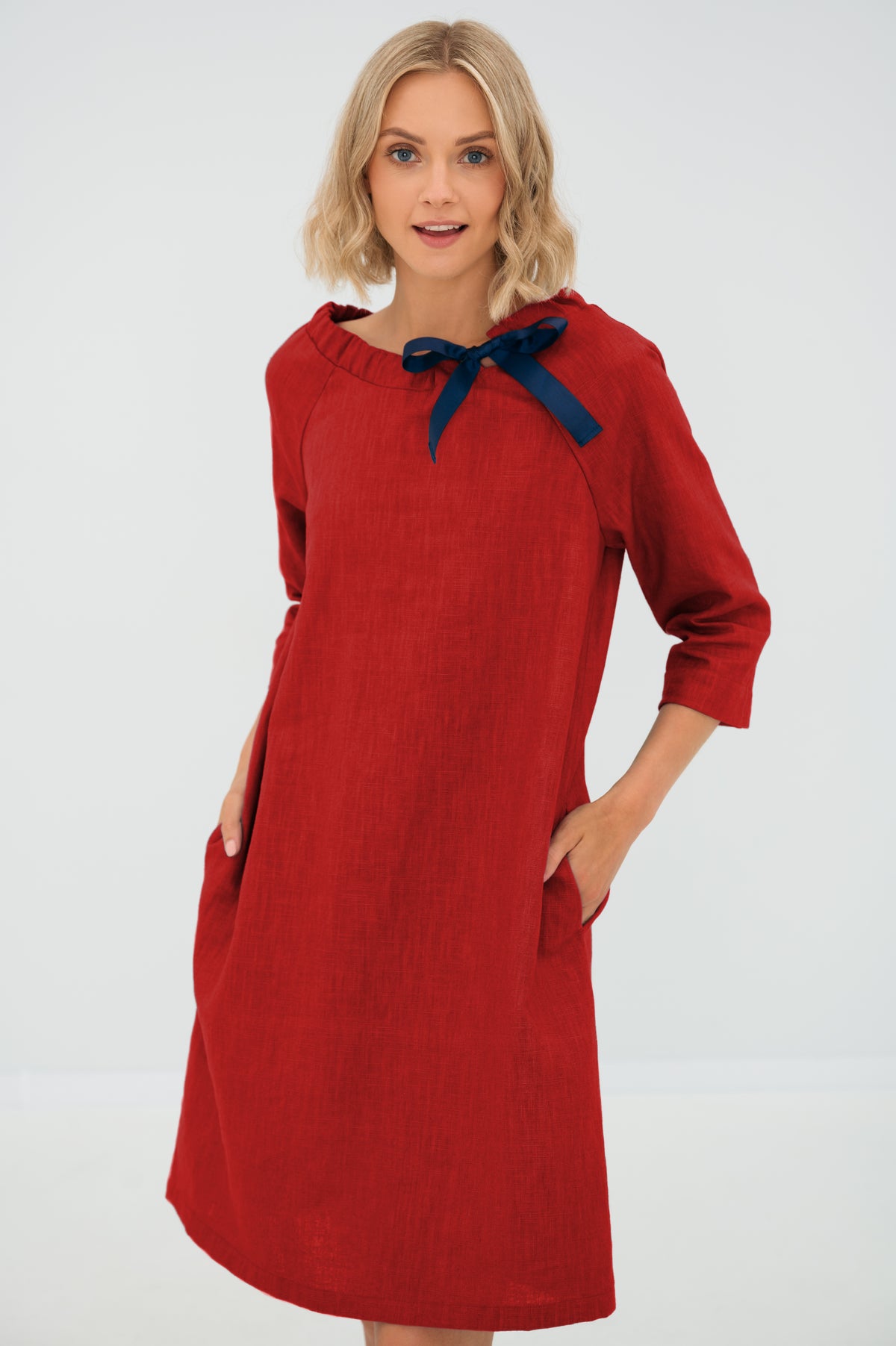
This is the backbone. A mid-length or ankle-length linen dress in a neutral you love — warm sand, soft olive, deep navy, or the uncomplicated black — cut loosely through the body so it flatters rather than clings. Look for a soft V-neck or round neckline that sits comfortably on the collarbone, set-in sleeves that move with you, and a hemline that falls just where it should without needing a belt to make sense. Put it on with flat sandals in the morning and low heels after five. No styling required.
2. A wide-leg linen trouser that feels like freedom
Waistbands have opinions. Linen trousers don’t. A high-rise wide-leg cut in heavier-weight linen (look for 180–250 gsm) gives you structure without stiffness — the drape does the work. Cream, taupe, or washed black are the three colours you’ll wear all summer. Pair with a fitted tee for mornings, a silk camisole and linen blazer for evenings. This is the piece that replaces five pairs of trousers you never actually reach for.
3. The linen shirt that dresses up or down without trying
One oversized, slightly cropped linen shirt — white, ecru, or chambray blue — tucked loosely into trousers or left open over a linen slip dress. This is the layer you reach for on cool spring mornings and warm summer nights alike. Buttons aside, the small detail that matters: a soft collar that can lie open or closed without looking creased. Wrinkles, here, are not a problem. They’re the point.
4. A linen tunic or blouse with a quiet neckline
A tunic-length blouse — somewhere between a shirt and a short dress — with a soft ruffle, a gentle square neck, or a small pleat detail. Cut long enough to wear over linen leggings or a slim skirt. What makes this piece work for women over 45 is the proportion: it covers what you’d rather not think about, while showing off collarbones, wrists, and the line of the shoulder — the parts of the body that age gracefully and deserve the light.
5. The linen skirt you forgot you needed
An A-line or softly gathered linen skirt that hits mid-calf. Not a midi that cuts you in half, not a maxi that drags. One that skims. Pair it with the white linen shirt, a leather belt, and sandals — you’re dressed. Add a cashmere cardigan and boots in October — you’re still dressed, with no effort. A linen skirt in a neutral is the quiet workhorse most women only discover after 40, and then wonder where it was all those years.
6. A linen jacket that replaces the blazer
The rigid blazer has had its run. A relaxed linen jacket — unlined, slightly boxy, in a colour that isn’t trying to match anything — gives you the authority without the stiffness. Wear it over the long dress. Throw it over jeans and a white tee. Travel with it rolled into your carry-on; a quick shake and it’s ready. This is the piece that gets better with every wash, every journey, every decade.
7. The layering linen cardigan or kimono
A lightweight open linen knit or soft kimono-style layer in a colour slightly darker than the rest of your capsule — think charcoal, olive, burgundy, deep teal. This is your transition piece: throws a shape over a dress when the wind picks up, softens a stricter outfit when the evening asks you to relax. It’s also the first thing you’ll pack, and the last thing you’ll give away.
Why linen, and why now
Linen is made from the flax plant — a crop that needs almost no irrigation, grows beautifully in European fields (much of the world’s finest linen still comes from France, Belgium, and Lithuania), and leaves behind soil that is richer than it found it. When the garment’s life ends, pure linen biodegrades back into the earth within months. Compare that to the synthetic blends that shed microplastics with every wash and outlive us all by centuries — it’s not really a comparison.
For women who’ve started paying attention to what their clothes are made of, what hands made them, and what the world will inherit when they’re done with them, linen isn’t a fashion statement. It’s a quieter, more considered way of getting dressed.
How to build the capsule (without buying everything at once)
Start with the dress. Wear it for a month. Notice which second piece you keep reaching for — the trouser or the shirt — and add that next. Let the capsule grow the way a garden does: slowly, attentively, with pieces that earn their place. A true linen wardrobe isn’t bought in a season. It’s built over years — and worn for many more.
The women we dress at LeMuse tell us the same thing, over and over: once they started wearing linen every day, they stopped shopping compulsively. Not because they ran out of interest in clothes — but because they finally had enough.
That, we think, is the quiet transformation.
Explore the LeMuse linen collection — natural, breathable, made slowly in Europe — and find the first piece of your capsule.